Drone-hunting on the border, plus turmoil at an Air Force think tank
NORTHCOM is testing ways to counter drone incursions, while an Air Force institute focused on China faces questions about its future.
NORTHCOM is testing ways to counter drone incursions, while an Air Force institute focused on China faces questions about its future.

The drone age did not end armored warfare. It rewrote the terms of survival, and Chinese military analysts are paying attention.

Supply chains are only as strong as their weakest link, which has been repeatedly proven to be true over the last few years.
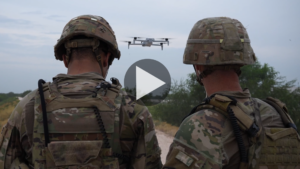
A brief overview of high-tech plans along the southern border as FY27 funding hangs in the balance.


An airborne layer pushes drone engagements farther from defended assets and changes the cost-per-kill equation.

In a nod to a common refrain that laser systems are always just five years away, Lockheed Martin’s Stephanie Hill said, “Not anymore.”

"If boost-phase intercept from space is not affordable and scalable, we will not produce it, because we have other options to get after it," said Space Force Gen. Michael Guetlein.

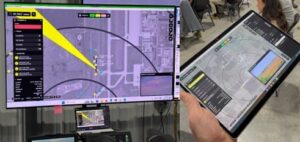
Architecture that linked sensors, C2, RF effects, and lasers into a distributed c-UAS kill chain.
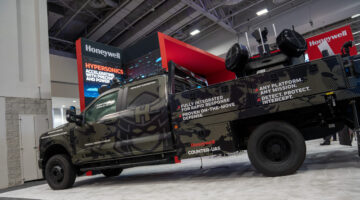
The system will pair Honeywell’s Stationary and Mobile UAS Reveal and Intercept (SAMURAI) system with Odys’ Laila aircraft to defend from unmanned drone threats.
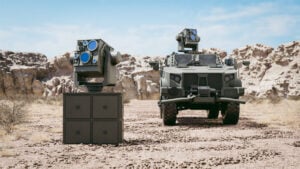
The unveiling at AUSA's Global Force comes as militaries the world over race for cheaper ways to confront the drone threat.
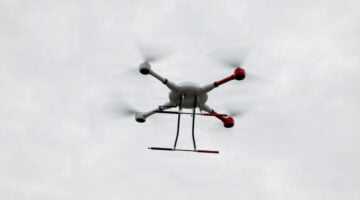
Two new Air Force RFIs seek information on systems to detect drones and defeat them with hard-kill systems as the service looks to shore up base defense.
“I think coordination has been lacking, and you're seeing a lot more sort of cowboy behavior, which could be problematic,” Stacie Pettyjohn, a senior fellow and director of the defense program at the Center for a New American Security, said in an interview with Breaking Defense.
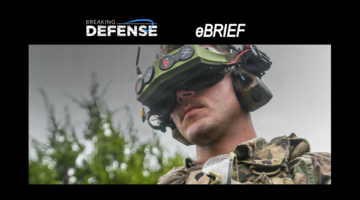
There is no single answer to the drone threat, pushing the Pentagon toward a broader mix of defenses.

“We're focused much more on what is made in Qatar, things that we've developed and produced here locally," Barzan Chief Commercial Officer Omar Al Qadi told Breaking Defense.
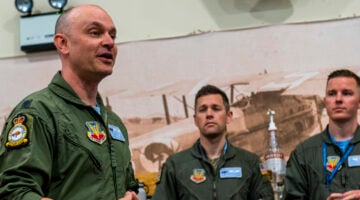
“My interpretation of that law is that we won't let a service procure something that doesn't perform and if they want to, JIATF-401 gets to say no,” said Col. Jonathan Beha, chief of requirements for the Joint Inter-Agency Task Force.
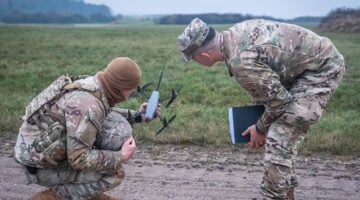
Separately, American soldiers also trained with Polish and Romanian allies on the Merops c-UAS system, already in use in Ukraine.
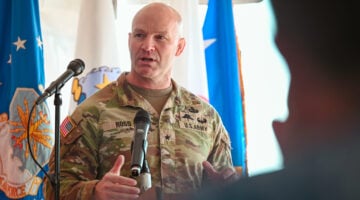
"We've got a wide variety of counter-UAS tools, and I actually think that we need all of them, because depending on where you are or what threat you're focused on, your requirements will be slightly different,” Brig. Gen. Matt Ross, commander of JIATF 401, said.